Communities and Impact
Mondo shop products are created by skilled craftspeople in various countries. In communities across Africa, we help develop fair trade practices, meaning all products are artisanal, allowing us to know the exact origin of each product. As a result we pay a fair price to women behind the craft. The opportunity to earn money through work and providing better living standards to their families helps to build empowerment.


Ghana
Kongo village is located in northern Ghana near the desert border and has traditionally been an agricultural community. However, climate change, infertile soils, and irregular rainfall makes farming difficult, and families can no longer feed themselves. That also results in less work opportunities in work, and people live hand to mouth. Therefore, the women of the village are very grateful for the opportunity to learn new skills to earn extra money. This additional income is mainly invested in children’s education and better food. The most diligent basket weavers have even been able to install running water in their homes – a great source of pride for the whole family!
The Yen Pang Basket Weavers cooperative was born in Kongo village in 2014, when Mondo offered village women the opportunity to learn basket weaving. Starting originally with 8 women under a mango tree, the cooperative has now doubled in size. With Mondo’s help, the community has settled in a small house where they gather to weave. In 2015, they already sent 350 baskets to Estonia. About half of the weavers are widows with low social standing, and the vast majority of the women are illiterate. In the autumn of 2014, designer Triin Kordemets stayed in Kongo village as a Mondo volunteer, and a year later Anne-Liis Leht; the baskets available for sale in Estonia are the result of cooperation between the local masters and them.

Mondo shea butter is produced by the Kongo Community Development Widows Association. In Kongo village, every woman knows how to make shea butter, but with the support of Mondo and Estonian development cooperation aid, a shea butter production center has been established in the village. It helped to enlarge the production and export amount. Around a hundred women are active in the cooperative today.
Stories of the Weavers

Akanima joined the Yen Pang cooperative since its beginning, when women were still weaving baskets in the shade of a mango tree. Basket weaving is a skill that Akanima has learnt from her mother and practiced almost her whole life. The girl’s family was poor, and she could not attend school. Weaving is precisely what has created opportunities for Akanima in life. Today, basket weaving is the sole income for her family of ten, and Akanima is especially proud that it has allowed her to send her children to school and also earn a high school diploma. Akanima’s absolute favorite weave is a wonderful vase that has even become famous in its own right after her – locals call this pattern the Akanima vase.

Abane is one of the most cheerful weavers in the Yen Pang cooperative and has been a member of the group from day one. She is present almost every day and fills the weavers’ house with positive energy! Abane learned weaving at the age of 15 from her mother and is now the cooperative’s most skilled craftsperson. Baskets requiring more complex techniques are also crafted under her skilled hands. With her husband, they raise four children, and they also take care of the child of Abane’s sick sister. Abane’s husband previously worked in a gold mine, but the work there is physically very hard and too dangerous for him to do today. Thus, basket weaving is their family’s largest source of income.

When Yaa Kumbee joined the Yen Pang cooperative, she did not know how to weave. Under the guidance of the other women, she quickly mastered several weaving techniques, and today almost all basket styles are easy for her. Yaa’s favorite is the market basket with a pattern called Bodsom. Yaa is a widow and raises her six children alone. Before taking up weaving, she had to travel to larger cities to make a living, which meant she was often forced to be away from her children for extended periods. Weaving in the cooperative located in Kongo village helps her stay closer to her children. It also provides her a steady income with which she can provide shelter for her children – something she is very proud of.

Vida learned the art of weaving from her parents. She joined the Yen Pang cooperative right at its very beginning, with the excitement about the opportunity to weave together with other women. Vida is married and her household includes eight people, including five children. The family relies heavily on her income, because although her husband earns a little money making necessary tools in the gold mine, it is not enough to support the family. The extra earnings from weaving help her family cope better. Vida also teaches weaving to her children and hopes they will proudly carry on the tradition. She also tries to motivate other young people to join the society – her great wish is that the skill of basket weaving does not fade into oblivion.

Bodsom has been a member of the Yen Pang cooperative since its founding day. It has been a great joy for her to see how the group has grown from a small society of weavers under a mango tree into a close-knit community. She learned weaving after her husband’s death, when as a single mother she had to find a way to support her children. Today, weaving has become her main source of income to cover her grandchildren’s school fees and the family’s daily food expenses. Over the years, Bodsom has trained many other women, helping them achieve a better standard of living as well. Thanks to her caring and helpful nature, she is warmly called the “mother of the cooperative” in the group.

Jennifer learned the art of weaving from her mother at a young age. She visits the weavers’ house almost every day and greatly appreciates having a common place to weave together. There she can socialize with other women, share worries, and relieve the stress of daily life while working. Jennifer and her husband have four children, and a total of thirteen people live in their household. Her husband is a farmer. Unpredictable weather has made farming increasingly difficult, making the family rely more and more on Jennifer’s weaving income. Before joining the cooperative, she sold her baskets at the market, where the revenue in some seasons did not even cover the cost of materials. Now, as part of the Yen Pang cooperative, she always receives fair pay for her baskets.
Uganda
Kampala Disabled Initiatives was established with Mondo’s support in December 2014 as an organization of women with special needs producing sewing and handicraft work. Estonian designer Liina Viira helped improve the women’s sewing skills by developing the KDI bag series, which stands out in the local market. The same products are also sold in Estonia at the Mondo Crafts shop.
KDI was registered in 2018 as a 10-member community organization. In addition to Mondo, KDI sells its products in Kampala’s tourist shop chain and has even sent its first orders to Canada. The organization earns extra income by offering paid sewing courses to local community members.

Kenya
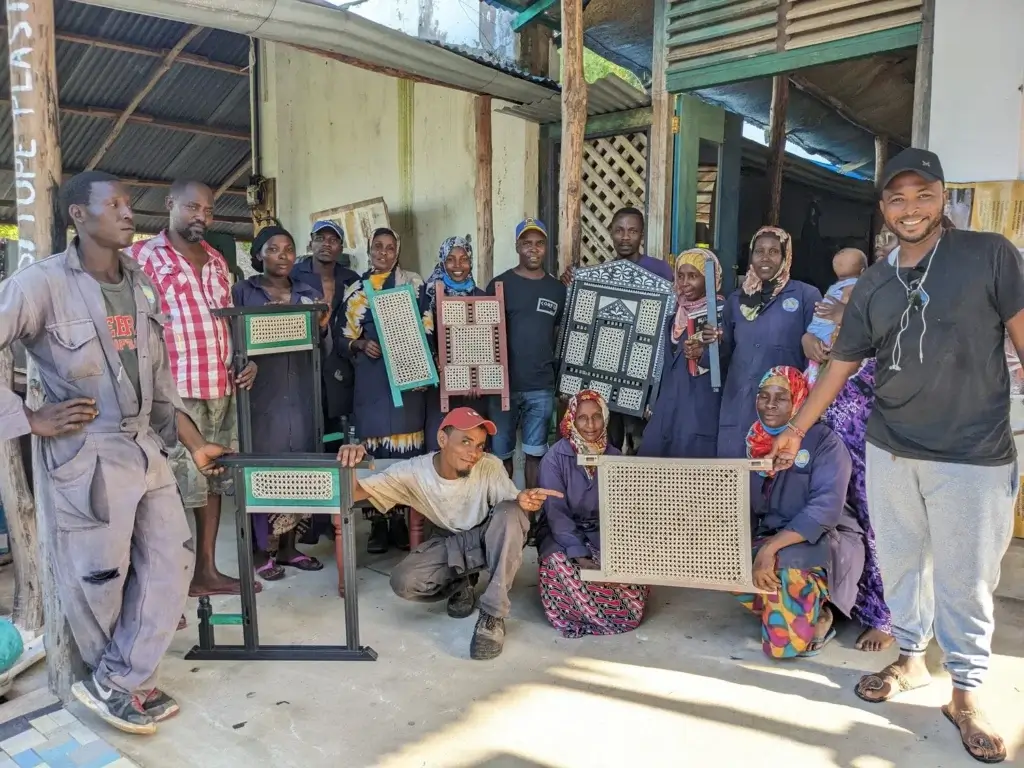
Flipflopi Designs is an East African movement aimed at ending single-use plastic and giving existing plastic waste a new lease of life according to the circular economy model. The social enterprise operates in coastal communities in Kenya in the Lamu region. Lamu is one of East Africa’s oldest and best-preserved Swahili settlements, known for its diverse cultural heritage.
Flipflopi Designs products originate from plastic waste collected in the local archipelago. Experienced artisans in Lamu then give the plastic new life by turning it into products ranging from interior decor elements and furniture to handcrafted boats. Since 2022, over 40 beautiful and durable products have been created in this way.
Applying the local circular economy model helps manage waste in coastal settlements near towns while keeping alive ancient indigenous crafting skills that are at risk of disappearing. Mondo Crafts brings coat racks from Flipflopi Designs products to Estonia, and larger items by agreement.
Ukraine
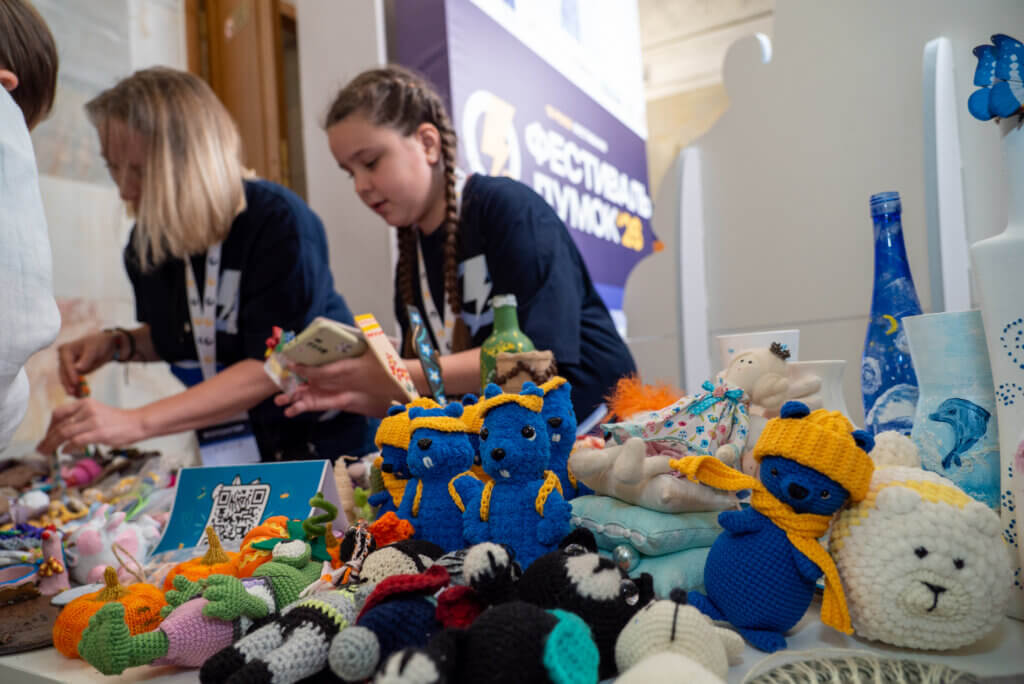
The mascot of the Opinion Festival, the marmot. The Ukrainian Opinion Festival was initiated by Mondo in cooperation with the organization East SOS in 2017 in Eastern Ukraine. The goal of this festival was to promote freedom of speech and democracy, and today the festival has expanded nationwide, having lasted for more than ten years and bringing people together even during the full-scale war.
The mascot animals of the Opinion Festival became marmots, known as “baboks”, which are common in the region of the festival’s birth city, Severodonetsk. With every marmot purchase, you support the evacuation of people from dangerous frontline areas through East SOS.
Lebanon
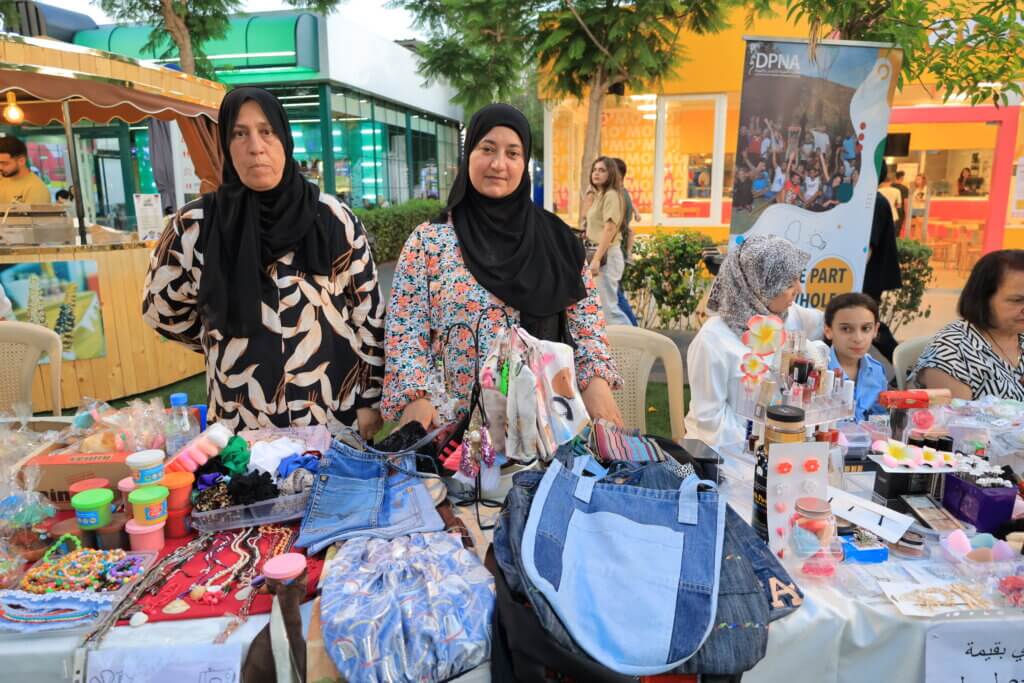
Lebanon’s economic situation is extremely difficult, with over 80% of people living below the official poverty line. The situation has been further aggravated by the military conflicts of recent years. Mondo met artisan Esmat in 2024 in the city of Saida, where we organized training for local and refugee women to help raise their incomes and independent coping skills. The training provided women with the skills and knowledge to start their own successful businesses.
Esmat, a mother of four, found the momentum there to set up her own handicraft business. She upcycles fabrics left over from furniture production and makes high-quality bags out of them. Esmat raises her children alone, and for her family, this is the only source of income.